So schließen Sie mehrere DSPA-Aerosolgeneratoren sicher an eine einzige Zentrale an
Das Anschließen mehrerer Aerosolgeneratoren an ein einziges Bedienfeld ist theoretisch einfach, doch herkömmliche Verkabelungsmethoden können echte Herausforderungen mit sich bringen. Eine Reihenschaltung birgt das Risiko von Single-Point-of-Failure-Ausfällen, während eine Parallelschaltung die Schaltkapazität Ihres Bedienfelds überlasten kann. Beides kann die Zuverlässigkeit und Konformität des Systems gefährden.
Genau deshalb hat DSPA das SCR-Interface entwickelt, eine Lösung, mit der Sie bis zu 15 DSPA-Aerosolgeneratoren sicher an einen einzigen Bedienfeldausgang anschließen und auslösen können, ohne Ihre Brandmeldezentrale (FACP) zu überlasten oder Schwachstellen in der Verkabelung zu schaffen.
Aerosol-Feuerlöschsysteme bieten eine modulare und skalierbare Lösung für den Brandschutz. Jeder Generator enthält ein festes Löschmittel, das bei Aktivierung eine fein verteilte Wolke aus Löschpartikeln erzeugt. Die Wirksamkeit des Systems hängt davon ab, eine spezifische Dichte dieses Aerosols zu erreichen, was bedeutet, dass alle Generatoren innerhalb eines geschützten Bereichs gleichzeitig aktiviert werden müssen.
Ein wesentlicher Vorteil von DSPA-Systemen ist die Möglichkeit, Generatoren miteinander zu verbinden, was eine größere volumetrische Abdeckung ermöglicht. Diese mit einem elektrischen Starter ausgestatteten Generatoren werden direkt an eine Brandmeldezentrale (FACP)angeschlossen. Der Starter enthält einen Widerstand, der sich bei Empfang eines elektrischen Stroms erhitzt und eine selbsterhaltende chemische Reaktion im Inneren des Metallgehäuses des Generators auslöst. Dieser Prozess erzeugt das löschende Aerosol.
Die elektrische Herausforderung: Reihen- vs. Parallelschaltung
Wenn mehrere Generatoren im selben geschützten Volumen erforderlich sind, werden üblicherweise zwei Verkabelungsmethoden verwendet: Reihenschaltung und Parallelschaltung.
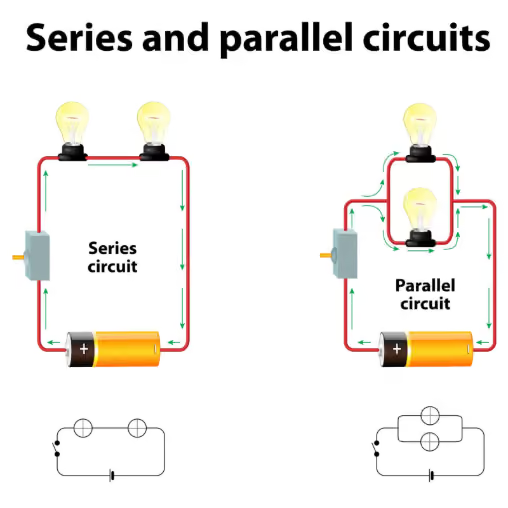
Reihenschaltung
- Vorteile: Der Gesamtwiderstand ist die Summe der Einzelwiderstände, wodurch die Stromstärke auf einem für die Brandmeldezentrale (FACP) sicheren Niveau gehalten wird. Die Formel für den Gesamtwiderstand in einer Reihenschaltung lautet:
Req =R1 +R2 +...+Rn
- Beispiel: Dieselben 10 Generatoren in Reihe geschaltet hätten einen Gesamtwiderstand von 8 Ω (Req =10×0,8Ω). Dies begrenzt den Strom auf sichere 3 Ampere (I=24V/8Ω).
- Nachteile: Diese Methode ist anfällig für einen Single Point of Failure. Wenn der Widerstand eines Generators unterbrochen wird, ist der Stromkreis unterbrochen und alle nachfolgenden Generatoren werden nicht aktiviert. Dies könnte bei einem Brandfall zu einem kritischen Ausfall führen.
Parallelschaltung
- Vorteile: Diese Anschlussmethode bietet Redundanz. Wenn ein Generator ausfällt, erhalten die anderen weiterhin Strom und werden aktiviert.
- Nachteile: Der Gesamtwiderstand (Req ) des Stromkreises sinkt, je mehr Generatoren hinzugefügt werden. Die Formel für den Gesamtwiderstand in einer Parallelschaltung lautet:
1/Rges = 1/R1 + 1/R2 + ... + 1/Rn
Dieser niedrige Widerstand stellt ein erhebliches Problem dar. Gemäß dem Ohmschen Gesetz (I=U/R)führt ein niedriger Widerstand zu einer hohen Stromstärke. Dies kann die Brandmeldezentrale (FACP) leicht beschädigen, da die meisten Zentralen nicht für die hohen Stromanforderungen mehrerer parallel geschalteter Generatoren ausgelegt sind.
- Beispiel: Eine 24V-Brandmeldezentrale, die mit 10 parallel geschalteten Generatoren (jeweils 0,8 Ω Widerstand) verbunden ist, hätte einen Gesamtwiderstand von nur 0,08 Ω. Dies würde eine Stromstärke von 300 Ampere (I=24V/0,08Ω) erfordern, was die übliche 3-Ampere-Grenze der meisten Ausgänge von Brandmeldezentralen bei weitem übersteigt.
Wie das SCR-Interface eine zuverlässige Aktivierung mehrerer Generatoren gewährleistet
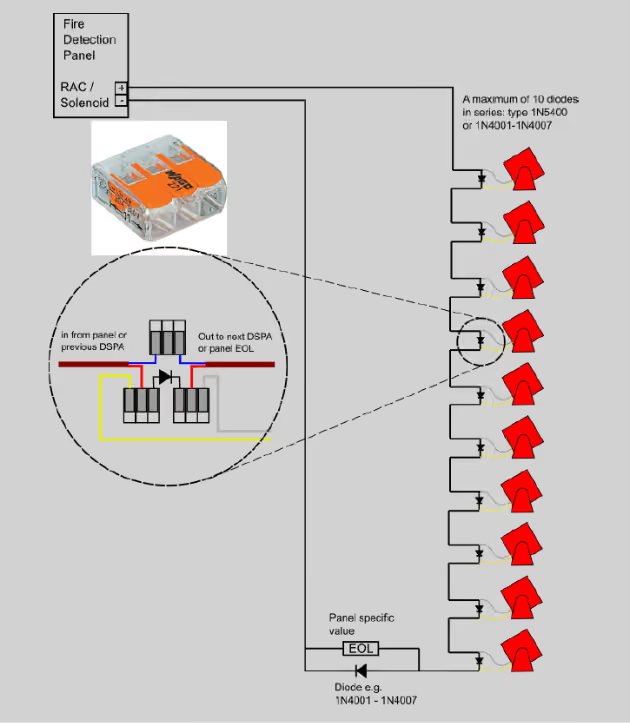
Um das Problem des Single-Point-of-Failure in einer Reihenschaltung zu beheben, benötigt jeder Generator eine Diode, um den Stromfluss auch bei einem Widerstandsdefekt aufrechtzuerhalten. Die manuelle Installation einzelner Dioden ist jedoch komplex und ineffizient (siehe beigefügter Schaltplan).
Tatsächlich verursacht jede Diode einen Spannungsabfall (ca. 1-1,5V), was die Anzahl der Generatoren auf etwa 10 begrenzt, bevor die Spannung für eine zuverlässige Aktivierung zu niedrig wird.
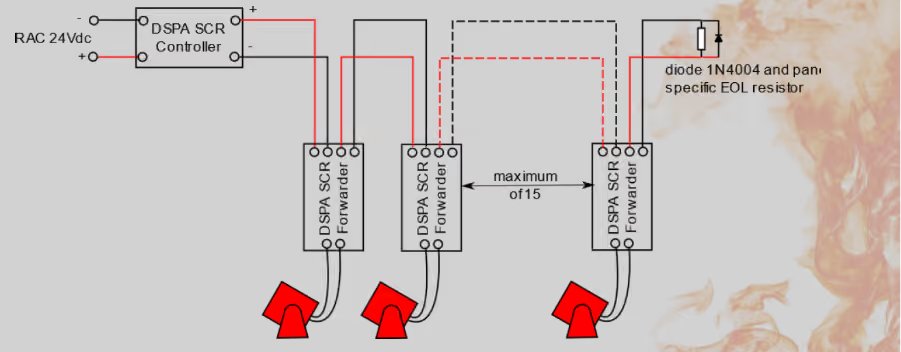
Das SCR-Interface ist die definitive Lösung für diese Herausforderungen. Es verwendet einen zentralen SCR-Controller zur Stromregelung im gesamten Schaltkreis, während separate SCR-Weiterleitungen – eine für jeden Generator – die Verteilung von den einzelnen Generatoren übernehmen.
- Vereinfachte Installation: Es ersetzt die Notwendigkeit komplexer, manueller Diodeninstallationen durch ein einziges, effizientes Gerät.
- Erhöhte Kapazität: Das SCR-Interface maximiert die Stromstärke und ermöglicht die Aktivierung von bis zu 15 DSPA-Generatoren von einer einzigen FACP*.
- Erhöhte Sicherheit: Die SCR-Weiterleitungsmodule, die mit Anschlussdosen geliefert werden, verfügen über beschriftete Klemmen für einfache und sichere Verbindungen, einschließlich der Anschlüsse für die Dioden und den Abschlusswiderstand.
Das SCR-Interface bietet eine robuste, einfache und skalierbare Lösung, die sicherstellt, dass Ihr DSPA-Feuerlöschsystem sowohl technisch einwandfrei als auch hochzuverlässig ist.
*Hinweis: Die FACP muss eine Mindestausgangsleistung von 500 mA und 20,5 V DC aufweisen.
Möchten Sie erfahren, wie das SCR-Interface in Ihr nächstes Projekt passt?
📩 Kontaktieren Sie DSPA für vollständige technische Spezifikationen und Integrationsberatung.